The Ripple Effect of Poor Workmanship
/Week 3 of 4 | Before You Choose the Lowest Bid | Design-Build Remodeling Series | Read time: ~5 min

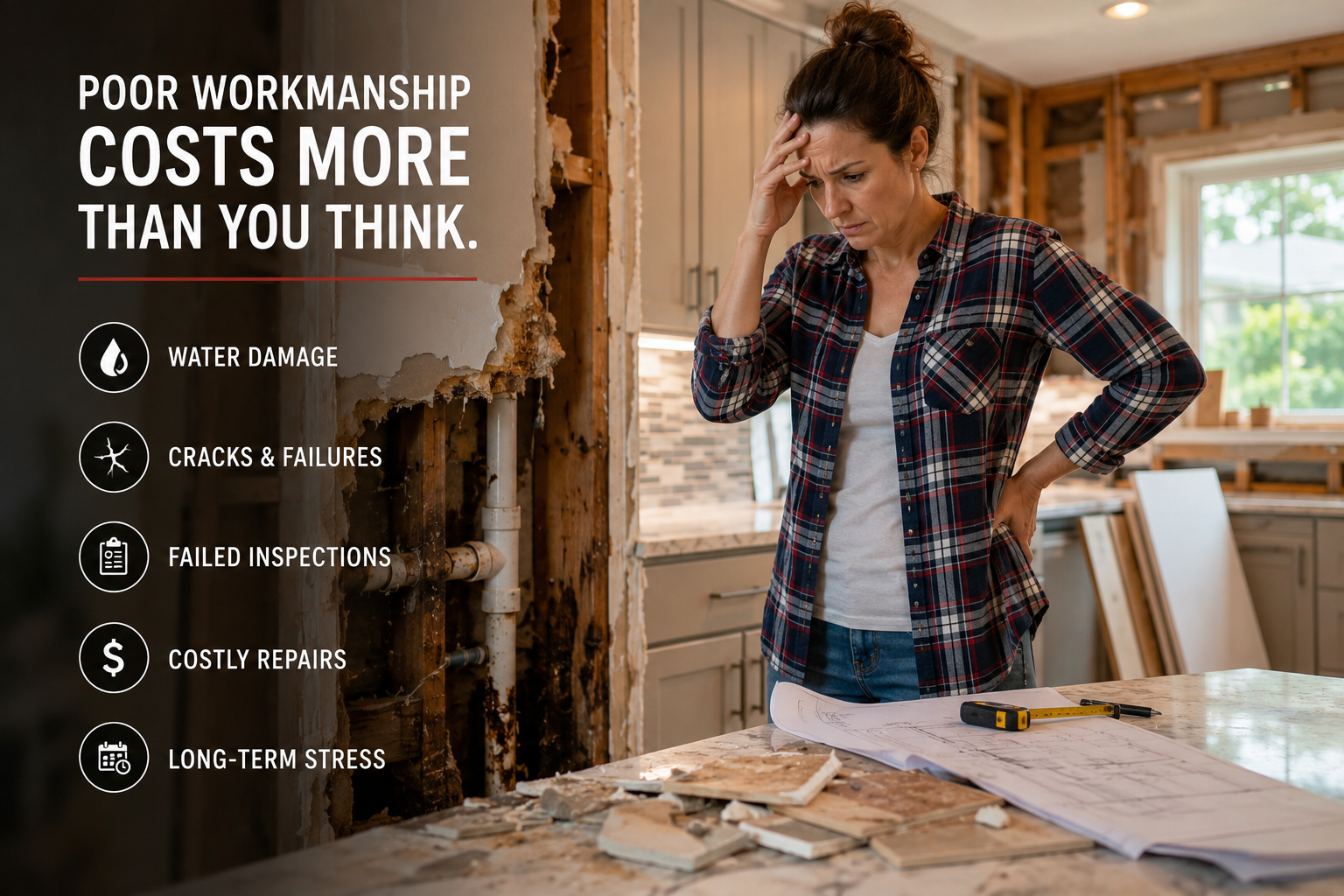
Poor remodeling work does not always reveal itself right away.
A bathroom can look beautiful on the day it is finished. A kitchen can photograph well. New trim, fresh paint, tile, countertops, and lighting can make almost any project look complete.
But quality is not only about how a remodel looks at the final walkthrough.
Quality is about how it performs months and years later.
For homeowners planning a kitchen remodel, bathroom renovation, home addition, ADU, or whole-home remodel in Worcester County or MetroWest, workmanship matters because shortcuts can become expensive long after the contractor has left.
When Remodeling Shortcuts Stay Hidden
Some remodeling problems are obvious right away. Others are hidden behind walls, under tile, inside framing, around windows and doors, or beneath the finished surfaces.
That is what makes poor workmanship so risky.
A homeowner may not know that waterproofing was done incorrectly until grout starts cracking, tile loosens, or moisture appears. They may not know framing was rushed until walls shift, doors do not close properly, or cracks begin to form. They may not know electrical or plumbing work was not completed correctly until there is a safety issue, inspection problem, or repair needed later.
The project may look finished.
But if the work underneath was not done properly, the problems may only be waiting to surface.
Poor Workmanship Can Create a Chain Reaction
One shortcut in a remodeling project can lead to several problems later.
Improper bathroom waterproofing can lead to moisture intrusion, subfloor damage, mold concerns, tile failure, and eventually a full tear-out.
Poor window or door installation can lead to drafts, water intrusion, rot, higher energy costs, and damage to surrounding framing.
Incorrect framing can affect walls, floors, openings, cabinetry, tile, and structural performance.
Electrical or plumbing shortcuts can create safety concerns, failed inspections, or expensive repairs.
Poor tile installation can lead to cracking, loose tile, failed grout, and premature replacement.
The original shortcut may have saved time or money during construction, but the repair often costs much more later.
That is the ripple effect of poor workmanship.
It rarely stays contained to one small issue.
A Low Price Can Hide Lower Standards
When homeowners compare remodeling estimates, it is easy to focus on the final number.
But if one proposal is much lower than the others, it is worth asking why.
Sometimes the lower price is missing scope. Sometimes allowances are unrealistic. Sometimes project management is not included. Sometimes the contractor is planning to use lower-cost materials or rushed labor. Sometimes the work is being priced without accounting for proper preparation, sequencing, inspections, or warranty support.
The concern is not simply that a contractor is less expensive.
The concern is whether the lower price reflects a different standard of work.
For example, two bathroom remodels may both include a tiled shower. But one may include proper waterproofing, substrate preparation, layout planning, and manufacturer-approved installation methods. The other may simply include tile that looks finished on the surface.
Those are not the same project.
They may look similar in a photo, but they are very different behind the wall.
Why Permits and Inspections Matter
Permits and inspections are not just paperwork.
They help protect the homeowner by making sure certain parts of the project meet code and safety requirements.
Unpermitted work can create problems later, especially during resale, refinancing, insurance claims, or future renovations. A home inspector or buyer may question work that was not properly permitted or completed to code. That can delay a sale, reduce buyer confidence, or require expensive corrections before closing.
For larger remodeling projects — especially additions, structural changes, plumbing, electrical, HVAC, bathrooms, kitchens, and ADUs — homeowners should ask clear questions before signing:
Will permits be pulled?
Who is responsible for them?
Will inspections be scheduled?
How are code-related issues handled if they come up?
A professional remodeling process should not make the homeowner guess about these things.
The Warranty Question
A workmanship warranty matters because remodeling work is not only judged on the day it is completed.
It is judged by how it holds up.
Some contractors offer little or no workmanship warranty. Others may offer a short warranty but have no clear process for handling issues. In some cases, the contractor may no longer be available when a problem appears.
That leaves the homeowner responsible for repairs that may have been caused by poor installation, improper preparation, or shortcuts taken during construction.
Before choosing a remodeling contractor, ask:
What workmanship warranty do you provide?
Is it in writing?
What does it cover?
What is excluded?
How do homeowners request warranty service?
How long has your company been in business?
A warranty does not replace good workmanship.
It supports it.
It shows that the contractor is willing to stand behind the work after the final payment is made.
Photos Do Not Tell the Whole Story
Project photos are helpful, but they only show part of the story.
A finished kitchen, bathroom, addition, or basement can look beautiful in pictures. But photos do not tell you whether the shower was waterproofed correctly, whether the framing was done properly, whether permits were pulled, whether the electrical work was inspected, or whether the materials were installed according to manufacturer requirements.
Before hiring a remodeling contractor, look beyond the gallery.
Ask deeper questions:
Will the work be permitted and inspected?
What waterproofing system do you use in wet areas?
Who performs the work?
How are subcontractors managed?
How is quality checked during the project?
What happens if something fails after completion?
Do you provide a written workmanship warranty?
Can I speak with past clients about their experience?
How do you document selections, approvals, and changes?
These questions help homeowners understand whether they are choosing a contractor based on surface appearance or a complete process.
Good Workmanship Protects More Than the Project
A remodeling project is not just about creating a beautiful space.
It is about protecting the home.
Good workmanship helps protect the structure, safety, comfort, function, resale value, and long-term performance of the property.
Poor workmanship can do the opposite.
It can create hidden moisture problems.
It can lead to repairs that should not have been needed.
It can make a homeowner nervous about what else may be wrong.
It can affect resale.
It can turn one completed project into another future project just to fix the first one.
That is why workmanship should be part of the decision before the contract is signed — not something homeowners only think about after something fails.
The Goal Is Work That Lasts
A successful remodel should not leave you wondering what may go wrong later.
It should give you a space that functions well, looks beautiful, and supports the way you live.
The right remodeling partner will care about what is behind the walls as much as what is visible in the finished photos. They will understand planning, code requirements, waterproofing, installation standards, inspections, sequencing, product specifications, and long-term performance.
Because in remodeling, quality is not just what you see.
It is what protects your home after the project is done.
Planning a Remodeling Project?
Before choosing a remodeling contractor based on price alone, take time to understand the quality standards behind the proposal.
At CORE Remodeling Services, Inc., our design-build process is built around clear planning, professional project management, experienced craftsmanship, permitted work, organized communication, and a 5-year transferable warranty.
Planning a kitchen remodel, bathroom renovation, addition, ADU, or whole-home remodel in Worcester County or MetroWest? Schedule a planning conversation with CORE Remodeling Services to talk through your project, your goals, and what quality workmanship should look like before construction begins.
Frequently Asked Questions About Poor Remodeling Workmanship
How can I tell if a remodeling contractor does quality work?
Look beyond finished photos. Ask about permits, inspections, waterproofing, project management, subcontractor oversight, warranty coverage, and whether you can speak with past clients.
Why does poor workmanship sometimes show up months later?
Many remodeling shortcuts are hidden behind finished surfaces. Moisture problems, tile failure, framing issues, drafts, and installation mistakes may not become obvious until the space has been used for a while.
Is the lowest remodeling bid always a bad choice?
Not always. But if one bid is significantly lower, homeowners should ask what may be missing, what standards are being followed, and whether the contractor has included proper planning, materials, permits, project management, and warranty support.
Why does a workmanship warranty matter?
A workmanship warranty gives homeowners a written process for addressing covered issues after the project is complete. It also shows that the contractor is willing to stand behind the work.
What remodeling problems can poor workmanship cause?
Poor workmanship can lead to leaks, cracked tile, failed grout, drafts, rot, mold concerns, failed inspections, electrical or plumbing issues, structural concerns, and costly repairs.
Planning a Remodeling Project?
Before choosing a remodeling contractor based on price alone, take time to understand the quality standards behind the proposal. Ask about permits, inspections, waterproofing, project management, workmanship standards, and what kind of warranty is provided after the project is complete.
At CORE Remodeling Services, Inc., our design-build process is built around clear planning, professional project management, experienced craftsmanship, permitted work, organized communication, and a 5-year transferable warranty.
We provide design-build remodeling services for homeowners throughout Worcester County and MetroWest MA, including communities such as Worcester, Shrewsbury, Westborough, Northborough, Southborough, Grafton, Hopkinton, Marlborough, Holden, Sutton, Upton, Hudson, Framingham, and surrounding towns.
Planning a kitchen remodel, bathroom renovation, addition, ADU, or whole-home remodel? Schedule a planning conversation with CORE Remodeling Services to talk through your project, your goals, and what quality workmanship should look like before construction begins.