When Design and Budget Work Together, Remodels Go Better
/
Week 2 of 4 | Before the Build | Design-Build Remodeling Series | Read time: ~5 min
A beautiful remodeling design only works if it fits the budget.
That may sound simple, but it is one of the most important parts of planning a successful remodel.
Many homeowners begin with a vision. They have saved inspiration photos, walked through showrooms, imagined a better kitchen layout, pictured a larger bathroom, or thought about how an addition could change the way their family lives.
That vision matters.
But if the design is developed without understanding the investment, the process can quickly become frustrating. A homeowner may fall in love with a plan, only to find out later that the cost is much higher than expected.
The opposite can also happen. A homeowner may start with a budget number, but without enough design detail, scope, selections, or material information, that number may not reflect the project they actually want.
A design that is not connected to budget can create disappointment.
A budget that is not connected to design can create confusion.
That is why design and budget should work together from the beginning.
Design Is More Than Picking Pretty Things
The design phase is not just about colors, finishes, and inspiration photos.
Those details are important, but good remodeling design goes much deeper.
Design affects layout, function, flow, storage, lighting, material choices, construction details, trade coordination, and cost.
In a kitchen remodel, design decisions may affect cabinetry, appliance locations, island size, plumbing, electrical, lighting, flooring, and how the space works for cooking, entertaining, and everyday life.
In a bathroom renovation, design decisions may affect shower size, vanity layout, tile design, waterproofing, ventilation, lighting, and accessibility.
In a home addition, design decisions may affect the foundation, roofline, siding, windows, HVAC, structural work, permits, and how the new space connects to the existing home.
Every design choice has a construction impact.
And many construction impacts have a budget impact.
That is why design should not happen in isolation.
Budget Is More Than a Number
A remodeling budget is not just one number written at the top of a proposal.
A realistic budget should connect to the actual scope of work, material selections, labor, permitting, project management, and construction requirements.
For example, two kitchens may be the same size but have very different costs. One may keep the existing layout, reuse appliance locations, and include standard cabinetry. Another may remove walls, relocate plumbing, add custom cabinetry, upgrade lighting, install higher-end finishes, and require structural work.
Those are not the same project.
The same is true for bathrooms, additions, ADUs, and whole-home remodels. The budget depends on what is actually being designed, selected, and built.
That is why early budget conversations are so important. They help homeowners understand whether the design direction matches the investment they are prepared to make.
Budget Conversations Should Start Early
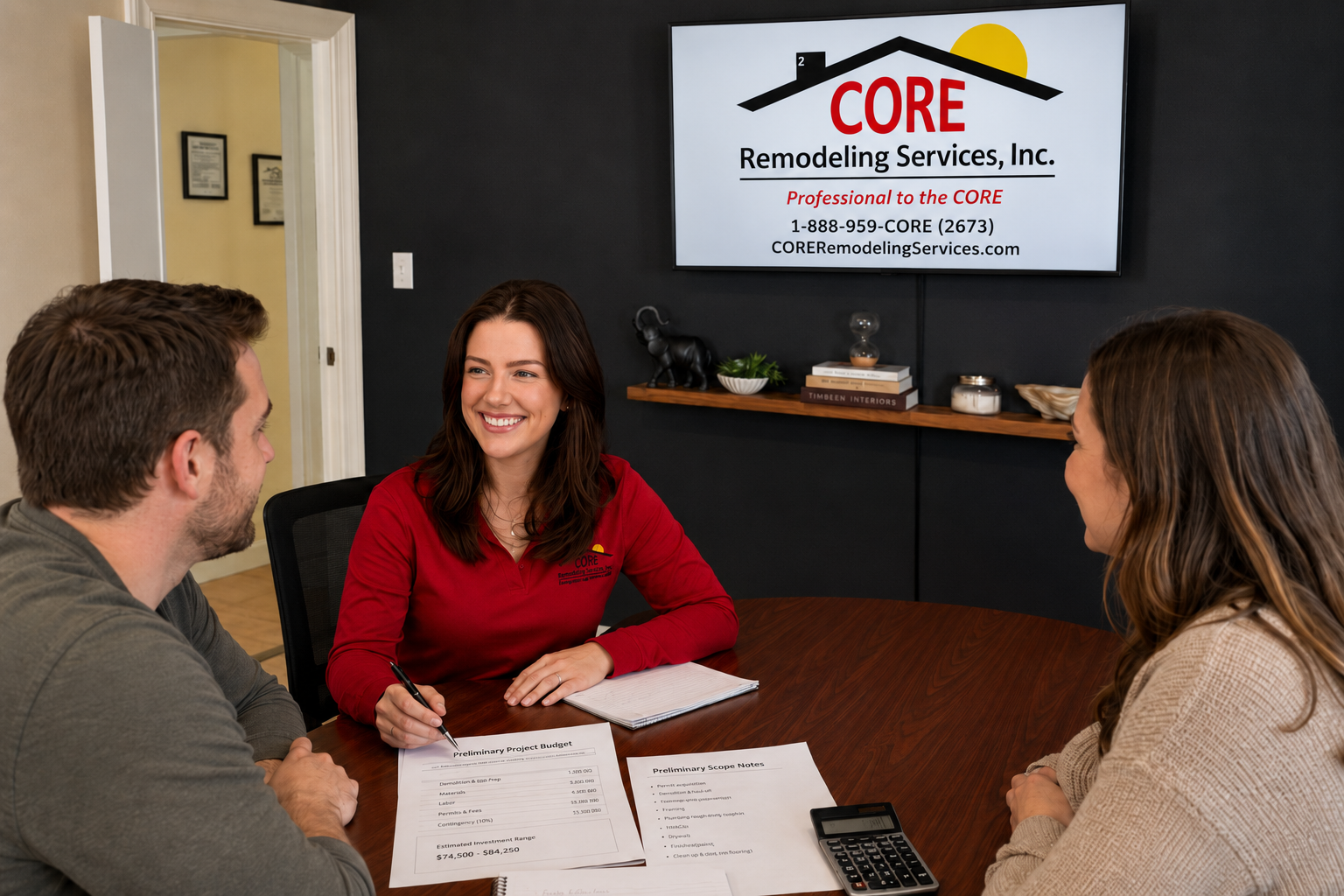
At CORE Remodeling Services, Inc., budget conversations begin early. During the first phone call, our office manager helps homeowners talk through their goals, project type, general investment range, and what they are hoping to accomplish.
This helps make sure the design process starts with realistic expectations, so scope, selections, materials, and investment can work together from the beginning.
The goal is not to limit the vision. The goal is to help homeowners understand what is realistic before they spend time developing a design that may not match the investment they are prepared to make.
The Problem With Designing Without Budget
When design and budget are separated, homeowners can end up in a difficult position.
They may spend time and energy developing a design they love. They may make selections, imagine the finished space, and emotionally commit to the project.
Then pricing comes in.
And the number does not match expectations.
At that point, the homeowner may feel like they have to start over, remove important features, compromise on selections, reduce the scope, or delay the project entirely.
This can feel disappointing because the design process created a vision before the investment was fully understood.
A better process connects design and budget earlier, so homeowners can make informed choices as the plan develops.
That does not mean every decision is based only on cost.
It means the homeowner understands the cost impact of decisions before they go too far down a path that may not fit.
The Problem With Pricing Without Design
The opposite problem is also common.
A homeowner may ask, “How much will my remodel cost?” before the design has been fully developed.
It is a fair question.
But without design details, the answer can only go so far.
A contractor may be able to provide a broad range based on project type, size, and past experience. But a final construction price depends on the actual scope, layout, selections, materials, site conditions, permits, and construction requirements.
Pricing too early with too little information can create a false sense of certainty.
The number may look appealing at first, but if the design later becomes more involved, selections change, or hidden requirements are discovered, the original number may no longer reflect the real project.
That is why a thoughtful remodeling process needs both pieces: design and budget.
One gives shape to the vision.
The other gives structure to the investment.
Selections Can Change the Budget
Selections are one of the clearest examples of why design and budget need to work together.
Cabinets, countertops, tile, flooring, plumbing fixtures, lighting, hardware, shower glass, appliances, and finish details all affect cost.
A homeowner may choose a tile pattern that requires more labor. A countertop material may change the price significantly. Cabinetry choices can affect storage, layout, lead times, and installation. Lighting and electrical decisions can affect both design and construction scope.
These selections are not just style choices.
They are budget decisions too.
That does not mean homeowners should always choose the least expensive option. It means they should understand how different selections affect the overall investment.
A good design-build process helps homeowners balance beauty, function, durability, and budget before construction begins.
Scope Decisions Affect the Investment
Scope is another major budget driver.
A project that keeps the existing layout will usually price differently than a project that changes walls, moves plumbing, relocates appliances, modifies structure, or expands the footprint of the home.
For example, a bathroom remodel that replaces finishes within the same layout is different from a bathroom remodel that moves the shower, changes the plumbing, adds custom tile details, and updates lighting and ventilation.
A kitchen remodel that updates cabinets and surfaces is different from a kitchen remodel that removes a wall, changes appliance locations, adds structural support, and reworks the entire layout.
A home addition is different again because it involves design, foundation, framing, roofing, mechanical systems, exterior finishes, permitting, and integration with the existing home.
The more clearly the scope is defined, the more clearly the budget can be understood.
Design-Build Helps Connect the Pieces
One of the benefits of design-build remodeling is that design, estimating, selections, and construction planning are connected under one process.
Instead of designing first and pricing later, the conversation can happen together.
As the design develops, the budget can be discussed. As selections are reviewed, their cost impact can be considered. As the scope becomes clearer, homeowners can better understand the investment required to build the project well.
This helps homeowners make better decisions.
They can decide where to invest, where to simplify, where to phase work, and where certain choices may not be worth the added cost.
The goal is not to take away the excitement of remodeling.
The goal is to create a plan that is beautiful, functional, realistic, and buildable.
Local Planning and Budget Considerations Matter
Design and budget can also be affected by local requirements, property conditions, and project type.
For homeowners in Worcester County and MetroWest MA — including Worcester, Shrewsbury, Westborough, Northborough, Southborough, Grafton, Hopkinton, Marlborough, Holden, Sutton, Upton, Hudson, Framingham, and surrounding towns — remodeling costs can be influenced by permitting, inspections, zoning, older home conditions, site access, structural requirements, and the level of finish selected.
A kitchen remodel in one home may have very different needs than a kitchen remodel in another. A bathroom renovation in an older home may reveal different considerations than a newer home. A home addition may require town approvals, engineering, foundation planning, and careful coordination with the existing structure.
That is why a realistic remodeling budget should be tied to the actual home, actual scope, actual selections, and actual local requirements.
Questions to Ask During the Design Phase
Before moving forward with a remodeling design, homeowners should ask:
Does this design fit the budget we discussed?
What parts of the design have the biggest cost impact?
Are there options to simplify the scope if needed?
Which selections are included in the current budget?
Which selections are still allowances?
What products or materials could change the final investment?
Are permits, inspections, and project management included?
Are there layout choices that could increase plumbing, electrical, or structural costs?
What decisions should be made before the final construction contract is signed?
How will design changes affect pricing?
These questions help homeowners stay connected to both the vision and the investment.
The Best Remodels Are Planned With Both in Mind
A successful remodel is not just about creating a beautiful design.
It is about creating a design that works for the home, the homeowner, the budget, and the construction process.
When design and budget work together, homeowners can make more confident decisions. They can understand tradeoffs, prioritize what matters most, and avoid the disappointment of falling in love with a plan that does not match the investment.
A well-planned remodel should feel exciting.
But it should also feel clear.
At CORE Remodeling Services, Inc., our design-build process is built around connecting scope, selections, design, materials, investment, and construction planning before the build begins. The goal is to help homeowners understand what they are choosing, why it matters, and how it affects the overall project.
Planning a kitchen remodel, bathroom renovation, addition, ADU, or whole-home remodel in Worcester County or MetroWest? Schedule a planning conversation with CORE Remodeling Services, Inc., to talk through your goals, your home, your design priorities, and the investment needed to bring the project together.
Frequently Asked Questions About Remodeling Design and Budget
Why should design and budget be planned together?
Design and budget should be planned together because layout, selections, materials, scope, and construction requirements all affect the final investment. Connecting them early helps homeowners make better decisions before construction begins.
Can I get a remodeling price before the design is finished?
A contractor may be able to provide a general range, but a final price usually requires more detail. Scope, layout, selections, materials, permits, and construction requirements all affect the cost.
What design choices affect remodeling cost the most?
Major cost drivers often include layout changes, structural work, plumbing or electrical relocation, cabinetry, countertops, tile, shower systems, windows, appliances, and the level of finish selected.
Does design-build help with budgeting?
Yes. A design-build process connects design, estimating, selections, and construction planning so homeowners can understand how design decisions affect budget before the project moves into construction.
What happens if my design is over budget?
If the design is over budget, homeowners can review options such as adjusting the scope, changing selections, simplifying layout changes, phasing work, or prioritizing the most important parts of the project.